
“Likable, but not exceptional.” That’s what Edwin Black’s third grade teacher wrote on his report card. Kind of an odd observation, Edwin thought to himself when he read it after his mother had left it lying on the kitchen table. But, his teacher was one with a fairly vast level of experience, so both Edwin and his mother took her at her word. His mother took it in stride, but Edwin saw it as a challenge.
“Maybe,” he thought, “I could turn the likable parts into something exceptional with enough effort. And he set out to do just that.
Nobody even knew him as ‘Edwin’. Everybody had called him ‘Pitch’ ever since he could remember. That was the only name he’d ever known, his uncle on his mother’s side calling him that as a toddler, making a play on words with his last name. His mother’s brother had never cared much for Edwin’s father, so it was just one more way to get under his skin. But the name stuck and he was forever known after that as ‘Pitch’ Black.
Turns out, it was the perfect name for someone in the sales game. “I’m always making a pitch!” he used to say. “And nobody’s going to forget who to call when they need to place an order.” It served him well.
So did his 1950 Plymouth DeLuxe Business Coupe.
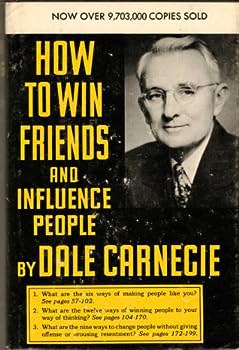
Earning the right to represent Acme Home and Agriculture Products throughout the Oklahoma / West Texas Sales Region, Pitch considered the Plymouth an extension of himself, and himself an extension of the company he worked for. The back end of the Plymouth swallowed up the samples and catalogs that were the tools of his trade. The glove compartment carried his well worn copy of How to Win Friends and Influence People. Dale Carnegie helped Pitch feel like he was closer to being exceptional. Certainly closer than he had been in third grade.
His schedule of travel had him and the Plymouth on the road 50 weeks a year, Monday thru Friday. The two weeks he had off every year would be split, one in the spring and one in the fall. In the spring he’d go visit relatives. In the fall, he’d stay at home and relax. Well, as much as he knew how to relax, anyway. Home was a 1946 Spartan Manor Model 25 trailer he’d bought, used and kept parked at the Pleasant Hill Trailer Park outside Odessa.
He got a good deal on the Spartan, and it made a lot more sense than throwing money away on rent for someplace he was away from more than he was home. When he was younger, he’d thought that he might move into management one day, settle down in Topeka, the Home Office, maybe get married and buy a house. A real one. But as the years after the war piled up and he saw other salesmen get their crack at the management gig and he stayed one the road, he figured he’d be in the Spartan for the long haul. “I may hitch it up and pull it to Florida, if that territory opens up someday,” he told Rusty at the Rusty Hammer Hardware Store one Friday afternoon when he was writing up an order of Acme Bird Feeders and Buckshot. “We’ll just have to see.”


The Plymouth he drove and the Spartan he called ‘home’ on the weekends were both utilitarian. They each served their purpose. He made use of both, but knew neither were exceptional. Most other folks did as well, and that’s just as well.
Pitch never really dated. “Marriage isn’t fair to someone whose life is on the road,” he told Trixie over at the Klip-N-Dye when he was showing her a new line of Acme Klipper-Matics that had attachments for both ladies and livestock. “Maybe someday, when I move to Florida.” He always finished each sales call with a traveling salesman joke. Nothing risqué, of course. Just sort of a tale to make them chuckle. Dale Carnegie wrote that it was always best to leave a customer with a smile on their face; that’s how they’d remember you. Or it might have been Mr. Tillman, Regional Sales Manager for Southern States, who told him that.
Thom Tillman had actually started with Acme a year after Pitch, but had found the road to Topeka a lot easier to navigate than Pitch had. Thom became VP while Pitch was still on the road. In the report he filed every year after spending two days in the territory visiting customers with Pitch, Mr. Tillman would note on the evaluation form completed and mailed into the personnel office, “likable, but not exceptional”. In 1953 Mr. Tillman was hired away from Acme by their biggest competitor, Nationwide Industrial Home Brands, to be their new General Manager.
Pitch thought that might be his opportunity, too. Either to move up into Mr. Tillman’s slot, or to maybe get a call from Mr. Tillman to go work for him at Nationwide Brands. When a year went by and Phil Dixon from the Rocky Mountain States Region got the VP position and he never heard from Mr. Tillman, Pitch fought off the disappointment. He told Agnes, his neighbor at Pleasant Hill Trailer Park, “He’s probably waiting to get settled in. Nobody comes in and starts making sweeping changes on Day One.” Agnes nodded along in agreement and poured them each another Scotch into the jelly glasses on the dinette.
Agnes was a widow. She hadn’t been when Pitch moved the Spartan in next to her and her husband, Arn. A couple years after that, Arn came down with the cancer. It started in his prostate, but by the time they found it, it had spread everywhere and he was gone within just a few months. Pitch missed the funeral because he was in Topeka for the Annual Sales Meeting, but he sent flowers and a set of new Acme Steak Knives, the ones with the lifetime guarantee that they never had to be sharpened.
A year or two after that, Agnes was at Pitch’s Spartan early one Saturday evening. They’d been talking and sharing a few laughs. Neither had laughed much lately. Pitch suggested they go to the Candlelight Inn for a charcoal steak. “Might be nice to share a meal together,” he told her. It did sound nice and she grabbed a coat from her trailer next door and they got in the Plymouth and headed towards the Candlelight.
The steaks were good, the lighting was low. Pitch and Agnes each had a few cocktails. It was the first time Agnes had really been out since Arn’s passing. While Pitch was used to eating most of his meals out because of all his time on the road, the experience of having someone on the other side of the table while he ate was an unusual treat.
When they got back to Pleasant Hill, he said, “The name of this place is kind of funny. It’s not really all that pleasant, and there isn’t a hill in sight!” Agnes laughed. Pitch thought about Dale Carnegie as he opened the passenger door of the Plymouth. “Want to come in for a nightcap?”


She’d been hoping he’d ask. While he took off his tie, Agnes got the jelly glasses and the Scotch out. The nightcap started out in the dinette and ended in the back of the Spartan in an awkward display of something that fell short of passion, but exceeded friendship. The next morning, as Agnes contemplated how to get back to her trailer from his, she noted that Pitch was likable, but certainly not exceptional, not really even meeting the low bar that Arn had set. After that, Agnes and Pitch only saw each other when they ran into one another at the washateria. They’d smile uncomfortably in the only way that people can who have seen each other naked once.
By 1954, Pitch was looking to trade-in the Plymouth. Late one Friday afternoon he stopped by Tumbleweed Plymouth / Dodge / Desoto in Fort Stockton to look at the new models and get some pricing. “Masterpieces of Value,” the brochure called them. The Plaza Business Coupe looked mighty sleek. “We don’t keep any of the Business Coupes in stock,” the salesman told him. “That’s a pretty specialized model. Don’t sell a lot. But we could surely order you one. Ten percent down would get the deal done. I’m afraid there won’t be much for a trade-in on your ’50 model. Low demand. A lot of miles. Might want to sell it yourself.”

“I’ve got a neighbor I might just give it to. She doesn’t have a car,” Pitch said. “The old thing still has a few miles left in her.” The salesman wasn’t sure if Pitch was talking about the neighbor or the ’50 Plymouth. “Let me see what she says, and I’ll stop back by on my next trip through Fort Stockton.”
An hour later he was home, going through the stack of mail at the dinette in the Spartan. There was a letter from the Corporate Office in Topeka. Signed by Mr. Dixon himself. Maybe this was the offer of a promotion that he’d been waiting for all this time. Pitch was glad he hadn’t made a deal on a new business coupe. A manager would be more inclined to drive a Belvedere Sport Coupe. Maybe even the convertible model. Could even be enough of a raise to justify the move up to a Dodge. He set the letter down on the Formica table top so he could pour a Scotch and take off his tie. He wanted to be relaxed and able to focus on the individual details contained in the corporate correspondence.
“As you know,” it started, “we have been working on a new state-of-the-art ordering system that will rival that of any of our competitors. This system will allow our valued customers to see our complete variety of products directly through catalogs mailed out quarterly and phone their orders directly to Product Fulfillment Warehouse in Topeka …” The remainder of the letter would have made Dale Carnegie weep.
Pitch gathered up his dirty clothes and headed to the washateria, hoping he might run into Agnes. It seemed that, for Pitch Black, the future was growing darker.


11 responses to “PITCH BLACK”
Thanks, Captain, for the reply to us deckhands here on the good ship RMS CMC. Stunning revelation that you actually read them!
Lest you interpret my silence on the matter to reflect a lack of appreciation, I wholeheartedly agree with Motcat that your characterization of Pitch and Agnes’ flail on the featherbed (“an awkward display of something that fell short of passion, but exceeded friendship.”) was indeed a brilliant line, or, as they often say in Fort Stockton, a real Diamond in a goat’s ass. A shout out, also, to fcamalo for a most effective one word encapsulation (“Willy”) which effectively steered the commentary in a literary direction.
Delighted to note that apparently Buttercup has “evolved” to the extent that she actually reads your stories and feels secure enough in the relationship to issue trenchant, if somewhat noncommittal thumbnail reviews of them over the communal dining table. Early on in your online musings, I recall your relating some icy exchanges which usually involved some variation on the theme of “Did you mention me again in one of your silly stories?”
I think Pitch deserves a shot at some measure of redemption. I’m not sayin’ he gets in on the ground floor of a little photocopying startup named Xerox, fully reaps the benefits and ends up buying one of the Hawaiian islands. Your ending of the story was certainly open-ended enough, however, that a second act is possible. Who knows? Maybe things will go from bad to worse for the guy (hint, hint).
Hope the medication is working . . .
I really enjoyed the responses to this one. Those noted below, as well as the one offered from across the table over coffee this morning. Buttercup said, “Well that wasn’t very happy.”
Hairless looks forward to a continuance where Pitch Black achieves some level of redemption. Davembarker notes the absence of any real motivation in the Plymouth advertising for 1954. Motcat notes a line he thought was particularly well crafted about the bungling Pitch and Agnus finding little between the sheets on which to continue their efforts. (Thank you.) And Cornfield Dave takes us down the road of the Bell Curve, and what it means statistically for all of us.
Each of these is a worthy and appreciated reply to a story that doesn’t present a happy ending, nor a punch line at its conclusion. When I wrote it, I knew it would be somewhat “outside the box” for those very reasons.
To Hairless, I would ask, “Does every character need redemption?” It certainly doesn’t happen that way in nonfiction. There could be any number of possible conclusions to this one. Pitch goes on to learn the new industry just taking shape in Information Technologies, having seen the handwriting on the wall, and makes millions while displacing an entire army of traveling salesmen just like himself. Or perhaps he takes another shot with Agnes in the washateria, they find love after another attempt or two, and start a family, sell their park trailers, and settle in Roadrunner Estates in a new tract home with the life insurance settlement Arn left behind. Or, maybe he finds himself increasingly staying in Fort Stockton and spending too much time at the Lucky Lady. One night after a few too many, he gets behind the wheel of the ‘50 Plymouth Business Coupe and heads home, but never makes it. Sometimes the last chapter is best left unwritten, each of us forced to come up with our own. Or maybe several.
Cornfield Dave accurately points out that, by virtue of definition, only the outliers can ever attain ‘exceptional’ status. The vast majority of us fall in the wide middle. If we were all exceptional, the term would have no meaning. In fact, being the outlier can be as much a curse as a blessing. Perhaps Pitch Black was right where he needed to be, where most of us are. It was to his benefit to remain optimistic, despite the disappointments that came his way. Disappointments will never disappear. Better we learn to think beyond them.
Funny how this story inspired references to Death of a Salesman, The Old Man and the Sea, Grapes of Wrath, and the Ten Commandments. Maybe the real Masterpiece of Value comes from the journey a short story takes us on as we look at the world through another’s eyes, and think, “If only…” or “There, but by the grace of God…” or reflect on the concept redemption, and where we find it.
Wonderful story that IMO is about the majority of our society whose lives provide the muted tones allowing those in the “Exceptional” range, (either positively or negatively), to be noticed. Statistically it must be so. Depending on where we are as a culture determines whether the standard deviation outliers will be either revered or feared. Also whether the “Likable, but not exceptional” will end up on the positive side of the line or be mocked. I choose to applaud Pitch’s optimism and character in the face of adversity which is life as most of know it. I’m thinking this tale is automotive “Old Man and the Sea” meets “Grapes of Wrath” but more interesting.
I’m a big fan of Dale Carnegie’s book as have been millions of others. Given to me by an uncle that cared for me as well as the people I would only meet once or know for years, I have given it to several about which I feel the same. Its lessons applied within the limits of the Ten Commandments I can’t say helped me rise to the top, but did on many occasions keep me from being sucked under in stormy waters.
Thanks for your reply. See above.
“an awkward display of something that fell short of passion, but exceeded friendship.”
Brilliant line Captain.
Thanks for your reply. See above.
“Masterpieces of value” doesn’t really get the juices worked up.
Thanks for your reply. See above.
“He’s not the finest character that ever lived. But he’s a human being, and a terrible thing is happening to him. So attention must be paid. He’s not to be allowed to fall into his grave like an old dog. Attention, attention must be finally paid to such a person.”
Hopefully, the Captain can concoct a follow up scenario where Pitch Black obtains some redemption.
Thanks for your reply. See above.
Willy