
The last chapter in a seven part series.
The philosopher Heraclitus is credited with saying “The only thing constant is change.” He went on to propose something along the lines of ‘no man can step into the same stream twice because neither the man nor the stream are unchanged’. As 1957 advanced towards 1958, the stream seemed to be becoming more turbulent.
In RoadRunner Estates, Phase III was rapidly becoming sold out, giving way to Phase IV. The families that were in Phase II were coming down off the high that buying new cars seemed to provide, at least temporarily. They were put off by the fact that most of the homes being sold in the new Phase IV appeared to all have 2-car garages. It seemed excessive. Like there was all of a sudden a pressure for every family to have two cars, whereas one had always made due in the past.
The square footage seemed to be creeping up, as well. The extra space in the house and the extra garage just off the kitchen made them more expensive to buy. Some of the women in Phase IV were working part time to help cover the extra cost. But that generated additional expenses as well, creating the need for that second car, child care, work wardrobes, additional training, and more money for “convenience items” with the reduced amount of time available. A new frozen food case was installed at the Piggly Wiggly for nothing but Swanson TV dinners and Sara Lee desserts. The folks in Phase IV didn’t seem to realize what they were missing as far as home-cooked meals.
Over at the Prairie View Twin Drive-In, the movies seemed to reflect the change in attitude. Twelve Angry Men and Old Yeller certainly didn’t leave their audiences smiling or feeling like they’d been entertained. A lot of the families loaded up the kids in their new cars and went to see Peyton Place, thinking it was a movie about small town America they could relate to. The young ones amused themselves on the playground underneath the big screen, just outside the view of their parents. The CinemaScope drama was both physically and emotionally way over the kids’ heads. The parents watching the dram from the front seats of their new chromed and finned cars saw way more Fort Stockton in Peyton Place than they wanted to be reminded of. “I go to the movies to forget about that kind of crap, not be reminded of it,” many of them noted in the line for the concession stand between features.
On the hi-fi stereos in the family rooms of RoadRunner Estates, the Crickets That’ll be the Day seemed to be giving way to Blue Monday by Fats Domino, signaling a shift in the mood. The comfort of having Ike in the White House gave way to questions of whether he was too old for the job. People were becoming more and more aware of the fact that the push of a button could end the world. They weren’t sure the finger on the button should be wrinkled and shaky. The kids in RoadRunner Estates watched Duck & Cover films in school and went through drills of what to do in case of a nuclear bomb being dropped nearby and went home and told their parents about it like it was just another day in class.
A lot of the guys in Phase II anxiously waited for the 1958 model new cars to come out. That was sort of a right of passage that lifted their spirits and gave them something to dream about. Even that was disappointing. After the rush that the ’57 models afforded, the follow-up ‘58s seemed disappointing. The Chrysler models seemed warmed over versions of the ‘57s. The GM and Ford brands appeared to have taken the good designs of 1957 and just thrown on more chrome, more headlights, and more bulges and creases just to make them seem to appear different. New colors couldn’t cover up their ill-fated attempts and sales plummeted. The new Edsel fell flat. DeSoto seemed to be on thin ice. Studebaker and Packard were to looking for someone to put them out of their misery. Cars from overseas seemed to be making sense to a much bigger audience as the country slid slowly into recession.


The shift in attitude was apparent in Phase II as much as anywhere as 1958 loomed on the horizon.
Kennel-Pal Pet Foods tried to expand into dry dog food, and then freeze-dried dog food in an attempt to keep up with the market. Wendell Yoakum was reassigned to other areas, the need for taste testing phased out as the product changed. Even after he shifted into R&D, then later Advanced Packaging, his intestinal problems never subsided, probably a result of the rancid horse meat from Mexico incident early in 1957. Kennel-Pal was eventually purchased by a national conglomerate with promises of “Nothing will change, you won’t even know we’re here.” In reality, everything changed. Management was let go and the plant eventually closed as Corporate shifted operations across the border for cheaper labor.
Wendell and Anita decided to put it all on the line, took a second mortgage on their house in Phase II and opened the Blue Collar Pet Store. Despite getting off to a shaky start, the store was a success, Wendell making sure that everything they sold for pets was top shelf and priced fairly. “The dog food is the best tasting you’ll find in all Texas,” he claimed to customers. They didn’t know just how he could be sure of such a thing.
Due to opening up the store, Wendell was the only one who kept the car he bought in 1957 for the long haul. In 1964, when he went to trade the ’57 Fairlane 500 in for one of the first Mustangs sold in Fort Stockton, the amount he was offered for the black and yellow coupe was an insult. “I’ll keep it and give it to the oldest boy when he turns 16,” he told the salesman at Frontier Ford. And that’s what he did. The kid totaled it on Highway 10 a month after he started driving, Shanon Hudspeth causing some sort of a distraction next to him on the front seat. He never fully explained the details, but Wendell read between the lines. Thankfully, Anita would have never dreamed of such a thing. The Yoakums kept the Mustang and their house in Phase II until they sold the Blue Collar Pet Store and retired to a condo on the golf course in Marble Falls in 1988 or ’89.


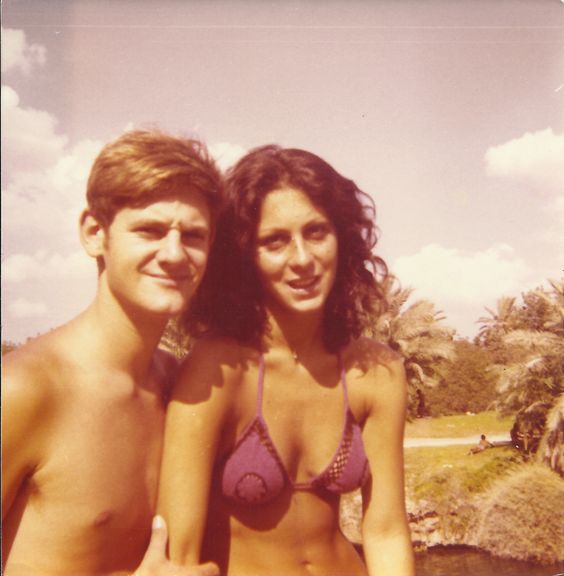

Virgil ‘Cactus’ Winkler, the Industrial Psychologist out at The Facility, continued his downward spiral. One Wednesday morning in early 1958 he drove his gold and white Plymouth Belvedere sedan out to Lake Leon instead of heading into the office. Taking the vacuum cleaner hose out of the trunk and placing it over the end of the tailpipe and threading it into the cabin, Virgil got back into the Plymouth and started the engine after rolling all the windows up. He drifted off to his eternal dirt nap as Elvis sang Too Much on the radio.
Most of the other couples in Phase II showed up for his funeral at Second Baptist. None of them really seemed all that surprised, but they all took covered dishes and Jell-O salads over to Glenda and helped her with the kids. Louise Panola, from across the street, said “She doesn’t really seem to be as upset as I thought she would be. She’s taking it well. Better than I would if something like that happened to Vernon.” Darla , Sheila, and Anita standing out in Anita’s front yard next to the marigolds she’d just planted nodded along in agreement. The life insurance policy Virgil left behind enabled Glenda to keep the house and pay it off. She traded in the Belvedere on a new Chrysler New Yorker hardtop sedan. In fact, it was the first thing she bought, right after a new vacuum. The New Yorker was the same two-toned color scheme Wendell had wanted when he bought the Belvedere. Rod Hardin went with her to help negotiate the deal at Cactus Chrysler-Plymouth-Imperial. Glenda was most appreciative. She paid cash for the Chrysler and made Rod a home-cooked meal to show her appreciation. The kids were away grieving at their grandparents at the time.
The gold and white Belvedere sat on the used car lot at the dealership for ages, till some kid from Marathon bought it, painted it red, and raised six different kinds of hell in it all over Pecos County. Rumors were he was the second owner to meet Jesus while behind the wheel of the ’57 Plymouth, but that may have just been a rumor. Folks in Fort Stockton like to make up their own stories when they don’t have all the facts.


Milt and Sheila Sherman were the first couple to move out of Phase II. In fact, they were the first couple to trade in their 1957 car, as well. Milt was so successful in making realistic prosthetic eyeballs that he was eventually able to shift into other areas of expertise. While gazing out at Sheila sunbathing in the backyard one day, he was inspired to take his business in other directions. Leasing warehouse space in Marfa and using primarily Guatemalan labor with little or no skills speaking English, Milt debuted a line of the most realistic sex toys ever made through a catalog company he’d set up on the side.
The catalog business, called For Your Eyes Only, was making so much money that Milt and Sheila sold the house in Phase II and built the biggest home in Phase V. In fact, theirs was the largest home in all of RoadRunner Estates for years, topping out at a ridiculous 2,100 square feet. The Shermans, right after moving into their new home, went down to Buckboard Buick and paid cash for two brand new 1959 models, a red LeSabre convertible for Sheila and a blue coupe for Milt.
They divorced in 1964. It was just after news came out that the warehouse space they were leasing in Marfa was actually owned by Mayor Goodman, also a silent partner in the catalog business. Apparently they had been getting a reduced rate on the rent and utilities due to ‘favors’ Sheila was performing for the mayor. The mayor was barely reelected after word of the arrangement was published in the Stockton Telegram-Dispatch. With the mayor denying all the facts and charges despite the overwhelming proof that the allegations were true, folks said it was Brother Bob’s endorsement from the pulpit that made the difference in the outcome.
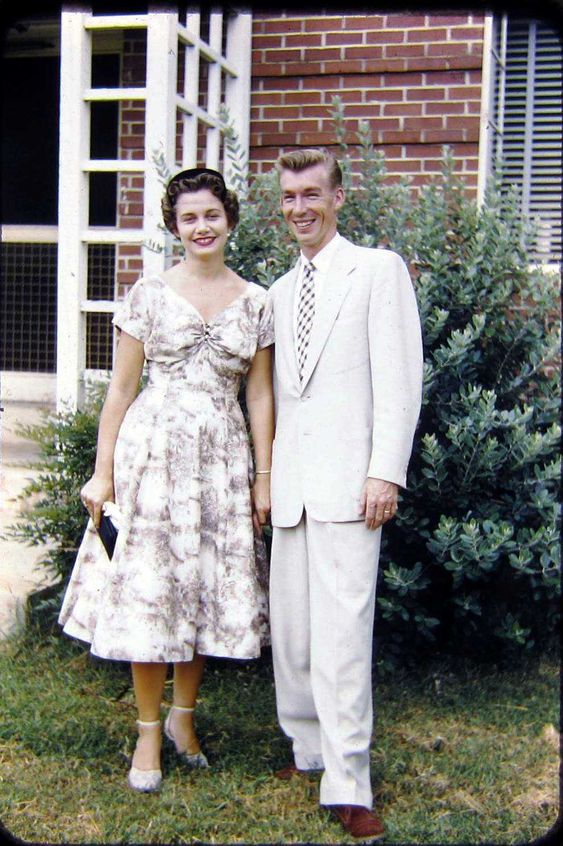


Gilbert and Patsy Reynolds’ story was another one from Phase II that seemed tragic, but had a silver lining. Gil was diagnosed with testicular cancer in late autumn of 1957, ending his time at the window looking at Sheila sunbathing in her backyard. The advent of PLAYBOY magazine had rendered Gil’s time at the window obsolete, anyway, providing a variation of appealing visuals with less chance of getting caught. There were rumors throughout RoadRunner Estates that the cause of his condition could have been linked to the asbestos upholstery in his 1957 Dodge Royal sedan company car, or the experimental asbestos boxers he was provided by his employer, Big Tex Asbestos.
By the time the cancer was diagnosed, it had spread throughout his abdomen. While everyone knew it was only an effort to extend the time he had left, both testicles, part of his spleen, 17 feet of large intestine, his lower stomach, and a mole from his cheek were all removed. The mole was only removed so he’d look better in the pictures; it had always been an eyesore. As a parting gift, Milt Sherman crafted a pair of replacement testicles. Cosmetic only, they were actually just a pair of eyeballs that had been returned for being the wrong color. Milt was going to toss them, anyway. The surgeon at Fort Stockton Memorial Hospital & Animal Testing Facility was put off doing the surgical replacement procedure, telling the scrub nurse, “I think one of his balls just winked at me.”
Miraculously, even though her husband was sporting fake testicles with a beautiful blue hue to them, Patsy was able to conceive and give birth to a baby boy just before Gil passed. The cancer had spread to his brain by then, so Gil never put two and two together and was a proud father to ‘his’ son for his remaining couple of weeks in Phase II.
Neighbors banded together for Patsy’s time of need after the funeral. In Vernon and Louise Panola’s family room, they all gathered for a combination wake, baby shower, and Tupperware party. Gil got a loving sendoff, Patsy got the nursery outfitted for the new baby boy, and Louise was able to sell enough Tupperware to reach Level Pink in the Tri-State sales contest, winning a trip for the whole family to Silver Dollar City in Oklahoma. Everyone noted later how much Patsy’s boy looked like Rod Hardin, the salesman for RoadRunner Estates.


Representatives from Big Tex Asbestos came and got the Dodge Royal sedan before Gil’s body was even cold. At company headquarters the seats, carpet, door panels and headliner were swapped out for a stock Dodge-issued cabin, the experimental asbestos interior burned in the company incinerator. Neighbors of the plant in South Dallas wondered what the strange smell was; many suffered respiratory issues long after the embers had cooled and were buried with all company records regarding the Dodge- Project. Rod Hardin gifted Patsy his ’56 Ford Sunliner when he traded it in at Frontier Ford, “Home of the Straight Shootin’ Deal” that December.
Vernon and Louise Panola left the neighborhood in 1961. By then they’d already traded in their ’57 Commuter wagon for a 1960 Colony Park. In an ironic twist, Vernon was transferred to the new NASA headquarters in Florida to work on the Mercury space program. “A Mercury is a Mercury is a Mercury,” he laughed at their going away cookout. New to Florida, they were surprised that the politics were even stranger than they were used to in Texas, the heat even more moist, and the accent people spoke with to be like fingernails on a chalkboard. All in all, they missed Fort Stockton.


While everyone was sad to see them go, their oldest boys had terrorized half of Phase I and a lot of the people on those blocks just thought, ‘Good riddance’. Wrapping houses, trees and bushes in toilet paper was one thing. When they started sneaking the young teenage daughters out of the houses of Phase I for trips to see the submarine races out at Lake Leon, it took a turn. “I hope those boys didn’t disrespect the plaque put up next to the Bois D’arc tree honoring the spot where Virgil met his maker in the Belvedere,” Wendell Yoakum said. “That should almost be declared holy ground and off limits to fornicating teenagers.”
Harv and Darla Morris left Phase II, as well, although they managed to stay till about 1963. By then Harv had traded in the Beetle for another exotic German car. When he drove back from Houston in a new 1963 BMW 700, all the other guys still left in Phase II got together in Wendell Yoakum’s garage with a Road & Track magazine just to figure out what the hell it was. After they closed the magazine, most of them were still scratching their heads. “Couldn’t he have just bought a Mercury Comet and called it good?” Wendell asked.




The Morris family packed up not too long after that and headed to Cupertino, California. Harv was well on his way to growing his ponytail back out at that point. Harv and Darla’s going away cookout was held at Milt and Sheila’s place, over in Phase IV, their impending divorce not yet public knowledge. Darla showed up braless, causing the women of RoadRunner Estates to bristle and the men to lean in for a closer look. She’d burned all her bras with the autumn leaves out back of the house in preparation for the move to the Golden State, where they’d no longer be needed.
The first of what would be three books written by Harv had come out, each progressively more alarming than the last, warning of the times to come just over the horizon. He was a wealthy man by that point, and would get only wealthier when the move to California was completed. While Phase II had never really understood Harv and Darla, their quirkiness was appreciated. Fort Stockton tended to expect all of its denizens to fall in line and act the same way. When some refused to, and continued to march to the beat of their own drum, it was both appalling and refreshing at the same time. Milt commented to Wendell, “I wished Darla would have been liberated earlier. A lot of braless time was wasted.”
Everyone gathered in the driveway for the official send off to California, the BMW 700 loaded with all the family’s possessions. It was only then they all learned that Rose Petal was actually a male child.
If Heraclitus was right about change, he would have enjoyed hanging out with Rod Hardin, the salesman in RoadRunner Estates. Rod was probably the most constant part of the whole neighborhood. Of course, he had a vested interest in RoadRunner Estates and it made him a very wealthy man.
In December of 1957 he became the first one in the neighborhood to actually purchase a 1958 model. After giving his ’56 Sunliner to Patsy Reynolds, he had her drop him off at Frontier Ford where he picked up his brand new Thunderbird coupe. The Winterset White over beige and white interior was the most beautiful car Patsy had ever seen. Parked outside the new model home in Phase IV, it made the house look even better and more expensive than it was. The Thunderbird was even featured in the print advertising for the new houses, and in a live TV spot on KFSX, channel 7.


While he’d sold every single home in the subdivision, he actually never purchased one himself. Rod kept his apartment at the Alamo Arms, eventually purchasing the entire building, keeping it as an investment till he sold it to Mason McCullough who then turned it into condos. By then, Rod realized that the big money wasn’t in selling homes, but in developing properties on a massive scale.
He continued to send Patsy Reynolds money every month to help support her son, and then paid for the boy’s education at UCLA once he’d graduated Jim Bowie High School, “Home of the Fightin’ Knives”. No one was surprised when the boy was hired by Rod’s real estate development company in Las Vegas. By then, Rod was overseeing development of housing subdivisions and shopping malls all over the Great Southwest, along with a small project or two in Delaware.
Time is fluid. It never stops and can’t be captured, even by cameras or calendars. Years are like photographs. Just split seconds that are changed the minute we blink, leaving only memories to fall back on and recall. Nineteen-fifty-seven seemed like a peak had been reached at the time. Maybe it was. But that’s probably the case just for those who were at their own particular peak at that time. For all of the rest, the best years are those that were experienced when they were reaching their own respective apex.
“Those were the days,” becomes cliche to those who didn’t live them. To those who did, it’s only downhill from there.


Did you like this series? Say something in the comments. Better yet, kick in a few bucks to help offset the costs of bringing you your daily dose of the Captain’s fine work.
Make a monthly donation
Make a yearly donation
Kick in $15 if it made you chuckle.
Kick in $20 if it made you nostalgic.
Kick in $25 if it made you think while you were nostalgically chucking.
Or, do whatever you want. Who am I to set limits on your generosity?
Your contribution is appreciated.
Your contribution is appreciated.
Your contribution is appreciated.
7 responses to “NINETEEN-FIFTY-SEVEN, Chapter 7”
My grandfather Herb had a Thunderbird very like this one. I saw it first at a very young age.
He was middle son of three, only the youngest brother attended college (at Rice, chemical engineering, knew how to use the slide rule of his that now resides in my bookcase), and part of a Houston community in the mid – 20s that included immigrants from Scotland and Ireland. He married Jean, born in Ayre.
As newlyweds, he took an assignment from his employer Anderson Clayton and Co (later famous for soft margarine) in Lake Charles, LA. Proving his worth, he soon received a promotion for a move to Sao Paulo, Brazil to construct, from greenfield, a cotton fibre and cottonseed oil processing plant. In a letter about the promotion he wrote to his mother in Houston, after first declaring how much he didn’t want to be away from her, and said it would be “a three year assignment,” and “could be the making of us.” [I have the letter still, and so applaud his choice of pronoun.]
Three years turned into 18. One miscarriage, then the birth of my mother in ’39. They had an expat life and lifestyle in Sao Paolo — his paychecks went “into a drawer,” all expenses being covered. Lifelong friendships established at the expat golf club, bowling alley, riding club for his daughter’s lessons. He chafed at being classified in an essential industry during the war and therefore unable to return stateside and join up, and he followed the wartime editions of Time that arrived by mail carefully.
When it came time to return to the US, he selected a property in Wimberley, TX adjacent to his schoolboy best friend, and also where he and Jean had honeymooned. His brother the engineer helped him lay out the site for their home, taking into account the orientation and movements of the sun one season to the next.
Needless to say, in the early 50’s this had no resemblance to the expat life in Sao Paolo. No gardner, cook, housekeeper — barely LBJ’s Rural Electrification — so it was an adjustment. He tried to make the rocky soil fruitful — cattle, goats, bee hives. It was a tough haul, but he had a balance sheet and kept the ship afloat. He and his schoolboy buddy had side by side fishing cottages at St. Charles Bay, nearby the Aransas Wildlife Refuge and the whooping cranes. That was their refuge when it was time to be away from their spouses for bit.
His daughter, my mother, attended a nearby parochial boarding school, a start up of the Episcopal diocese.
There, fatefully, she met my Dad. He was on staff and coached the tennis team. Within the week that she turned 18 they eloped to Mexico City in a Fairlane retractable hardtop, despite a considerable difference in their ages. Nine months later, I was born in San Antonio with her still a child in so many ways. Her papa was not amused, to put it lightly.
Thankfully she is going strong and just attended the marriage of a grandson. He won’t see the significance of a late 50’s Thunderbird, and I can’t expect him to. But it pulls up a bounty of stories and family history when I see one.
“Those were the days,” becomes cliche to those who didn’t live them. To those who did, it’s only downhill from there. Truer words were never spoken. Sad but true.
Virgil’s life insurance policy paid off on a suicide? So unlikely, but interesting.
Sure, Ford’s 1958 lines added quad headlights and taillights and rearranged some chrome- and
MOPAR did pretty much the same-
But – for 1958, to the contrary, the GM line, top to bottom took on a completely revised shape, “X” chassis, rounder, heavier, and for the most part, slathered with excessive chrome. While the tri-five’s 57 Chevy was a clever revision of the 1955 models and my 1956 Bel-air convertible, my ‘58 Impala convertible seemed a more grand expression, somewhat more “Cadillac” in presence.
Now to deal with our ongoing heat, and wait for the relative cool of evening to drop a top, and to cruise with my bride of nearly 55 years in some vintage iron and head to a moderately elegant eatery for oysters, a shrimp Po-Boy, and maybe some liquid accompaniment.
Cheers, all y’all
I think Marty may be right regarding self-termination and policy payout, but I think that whole life policies differ from term policies in that regard. North Western Mutual Life used to offer at least one type that if “you get dead, get paid”. However, you didn’t get an accidental death ‘bonus’ amount under any circumstances. I don’t know for sure because fortunately no claim has been against it and I hope won’t be for quite some time.
As for Glenda, I’m glad it worked out for her.
“Most life insurance policies have what is called a ‘suicide clause.’ This is a time period when death benefits under a life insurance policy will not be paid out due to a suicide. It is typically two years. When a policy is updated with the same company, the clock starts all over again. If the suicide occurs after two years, then the insurance company has to pay out the death benefits.”
Guessing ol’ Cactus Winkler had been timing the event just right, one eye on the calendar, the other on the Electrolux, keys to the Belvedere jangling in his pocket.
Oh gosh. Kinda sad. Not to pick a nit but I don’t think asbestos burns. That’s sorta the point of it.
“With the mayor denying all the facts and charges despite the overwhelming evidence…”
Even if Mayor Goodman was paid to tell the truth, he’d go lying on credit.