
There are certain pieces of news that should not be announced before breakfast.
War. Death. A major increase in property taxes. The closing of a favorite restaurant. And, apparently, the possibility that Ford Motor Company might build a Mustang with four doors.
Lucinda discovered this shortly after seven-thirty one morning when she walked past the back table at the Grounds for Divorce carrying a fresh pot of coffee and found Hairless B29 staring at his telephone with the expression of a man who had just learned that somebody intended to add a mother-in-law suite to the Alamo.
“They’re gonna do it.”
Nobody looked up.
Hairless stared at the screen.
“I swear to God, they’re gonna do it.”
Angus Hopper buttered his toast. “Who?”
“Ford.”
That got Rex Hall’s attention. Rex lowered his coffee.
“What’d Ford do?”
“They’re talking about building a four-door Mustang.”
There was silence.
Not ordinary silence. The Grounds for Divorce rarely experienced ordinary silence.
This was the kind of silence produced when several people simultaneously heard something they understood perfectly well but hoped might become less stupid if nobody acknowledged it.

Trixie finally looked up from her eggs.
“A what?”
“A four-door Mustang.”
“No.”
Hairless pushed the telephone across the table.
“I’m looking at it.”
Trixie did not touch the phone.
“I don’t care if you’re looking at the Virgin Mary driving one. There’s no such thing as a four-door Mustang.”
“Apparently there might be.”
Angus continued buttering his toast.
“Then it ain’t a Mustang.”
And there it was.
The opening shot.

By eight o’clock, the discussion had expanded from Hairless, Angus, Rex and Trixie to include Sheriff Ray Vickers, Brother Bob, Mayor Goodman, Chad from the Piggly Wiggly and New Guy, whose actual name everyone had known for several years but which no longer seemed important enough to use.
The argument was helped considerably by the fact that nobody actually knew what Ford was going to build.
There had been rumors. There had been renderings. There had been stories suggesting Ford was considering expanding Mustang into a broader family of vehicles, possibly including a four-door performance sedan. There were people predicting what such a car might look like, people insisting they knew what it would be called and other people explaining with complete authority why Ford would never do the thing everyone else was explaining with complete authority Ford was about to do.
This was precisely the amount of reliable information necessary for a productive morning at the Grounds for Divorce.
Hairless had already chosen sides.
“It’s wrong.”
Lucinda refilled his coffee.
“You’ve been saying that for twenty minutes.”
“Because it keeps being wrong.”
“Maybe another cup will fix Ford.”
“It’ll take more than coffee.”
Across the table, Rex had borrowed Hairless’s telephone and was studying one of the speculative pictures.
“I don’t know,” he said. “That’s actually a pretty good-looking car.”
Hairless stared at him.
“Et tu, Rex?”
Rex looked over his glasses.
“I don’t know what that means.”
“Means you’ve betrayed me.”
“I said I liked the car. I didn’t surrender Poland.”
Angus leaned over to examine the picture.
The automobile on the screen unquestionably resembled a Mustang. Long hood. Short rear deck. Familiar grille. Running horse up front. Muscular haunches. Except there was something else between the front wheel and the rear wheel that generations of Mustang owners had somehow managed without.
A second door handle.
Angus recoiled.
“Looks like somebody stretched a Mustang over a Buick.”
Trixie took the phone.
“I like it.”
Hairless turned toward her so quickly that his chair squeaked.
“You can’t.”
“I just did.”
“It’s got four doors.”
“I can count.”
“A Mustang has two doors.”
“Why?”
Hairless opened his mouth.
Nothing came out.
Trixie smiled.
“That’s what I thought.”
“No, wait. Because that’s what a Mustang is.”
“That’s not an answer.”
“Of course it’s an answer.”
“No. That’s you taking the question, putting a cowboy hat on it and sending it back across the table.”
Angus frowned.
“Leave the hat out of this.”
The first Mustang had appeared in 1964, and although nobody at the table had been standing inside the Ford Pavilion at the New York World’s Fair when Lee Iacocca unveiled it, by breakfast they had collectively developed memories suggesting otherwise.
Everybody knew what a Mustang was.
Or thought they did.
That was the problem.
The original Mustang had been inexpensive, sporty, youthful and practical enough that an ordinary person could actually buy one. It had borrowed heavily from the humble Falcon underneath, then wrapped those sensible mechanical pieces in a body that made people feel considerably less sensible.
There had been coupes.
Convertibles.
Fastbacks.
Six-cylinders.
V8s.
Shelbys.
Mach 1s.
Bosses.
Cobras.
GTs.
Mustangs that barely had enough horsepower to frighten a squirrel and Mustangs capable of rearranging your internal organs.
There had even been a Mustang II.
Hairless preferred not to discuss that.
But through all the changes, one principle had survived.
Two doors.
“The whole point,” Hairless explained, “is that a Mustang isn’t supposed to be practical.”
Trixie stared at him.
“That’s your argument?”
“Yes.”
“Ford should deliberately make it less useful?”
“Exactly.”
“That’s the dumbest thing you’ve said this week.”
“It’s Friday.”
“I know.”
Sheriff Ray had been quietly eating biscuits and gravy through most of this. He had long ago learned that the best way to survive an argument at the Grounds for Divorce was to avoid becoming interesting.
Unfortunately, Hairless noticed him.
“Ray. Back me up.”
Ray continued eating.
“On what?”
“Four-door Mustang.”
“What about it?”
“Wrong or right?”
Ray considered this.
“Does it have enough room in the back for somebody wearing handcuffs?”
Hairless blinked.
“I don’t know.”
“Then I don’t have enough information.”
Mayor Goodman arrived at precisely the wrong moment.

He entered wearing a dark suit despite the August heat, his red tie descending to a point several inches below where respectable neckwear traditionally surrendered. He stopped beside the table, listened for approximately eleven seconds and immediately understood the entire automobile industry.
“Ford has no choice.”
Hairless groaned.
“Here we go.”
Mayor Goodman pulled over a chair.
“You people are failing to consider demographic market evolution.”
Angus looked at Lucinda.
“Can I get this to go?”
“You haven’t ordered anything.”
“Then I’m ahead.”
Goodman continued.
“The modern automobile purchaser requires flexibility. Brand expansion is inevitable. Look at Porsche.”
Hairless pointed at him.
“Don’t bring Porsche into this.”
“They built an SUV.”
“That was wrong too.”
“And it became enormously successful.”
“Successful and right aren’t the same thing.”
For the first time that morning, the table went quiet for a reason other than shock.
That was actually a pretty good point.
Mayor Goodman recovered.
“Nevertheless, the market determines legitimacy.”
Brother Bob shook his head.
“The market determines what people will buy. That’s not necessarily the same thing.”
Goodman looked irritated.
“That’s what I just said.”
“No, it isn’t.”
“It’s what I intended.”
Lucinda set down a plate in front of New Guy.
“That’s generally where the mayor does his best work.”
New Guy had been studying the pictures on his own phone.
“I’d buy one.”
Every face turned toward him.
Hairless looked wounded.
“Why?”
“Because I like Mustangs, but I’ve got kids.”
“Buy an Explorer.”
“I don’t want an Explorer.”
“Then make the kids climb into the back.”
“They’re teenagers.”
“They can climb.”
“One of them is six-two.”
“Then he needs the exercise.”
New Guy shrugged.
“Or Ford could put another couple of doors on it.”
Hairless looked around the table in disbelief.
“Does nobody understand what we’re dealing with here?”
Rex did.
He understood it better than most of them, although not necessarily in the way Hairless wanted.
Rex had been alive long enough to watch Americans repeatedly announce that the automobile had finally reached its proper form, only to abandon that form approximately seven years later.
Station wagons had once been the obvious family car. Then minivans arrived and made wagons seem old-fashioned. Then SUVs arrived and made minivans seem embarrassing. Then crossovers arrived and became station wagons that had been lifted three inches so nobody had to admit station wagons had been a pretty good idea.
“The names don’t mean what they used to,” Rex said.
Hairless looked suspicious.
“What does that mean?”
“Used to be, a name told you what kind of car something was. Thunderbird. Two-door personal luxury car. Bronco. Utility vehicle. Mustang. Pony car.”
“Exactly.”
“Except Ford’s already been messing with that.”
Hairless knew where this was headed.
“No.”
Rex smiled.
“Mach-E.”
“We’re not discussing that.”
“We have to.”
“No, we don’t.”
Trixie brightened.
“The electric Mustang.”
Hairless pointed at her.
“Don’t call it that.”
“Ford does.”
“Ford is wrong.”
“The horse is right there on it.”
“They can put a horse on a refrigerator. That doesn’t make it a Mustang.”
Angus nodded approvingly.
“Now he’s making sense.”


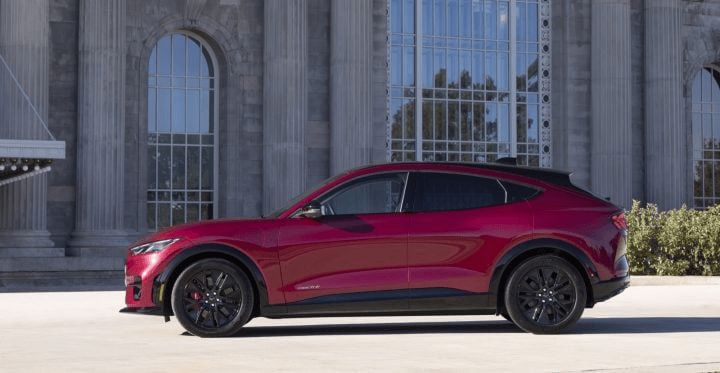
The Mustang Mach-E had been a sore subject at the back table since the moment Ford had attached the Mustang name to an electric crossover. Hairless’s position was that the vehicle might be perfectly good but should have been called something else.
Trixie’s position was simpler.
Ford owned the name.
“They can call it whatever they want.”
“No, they can’t.”
“Apparently they can, because they did.”
“That doesn’t make it right.”
“We’re back to this again.”
“Words mean things.”
Trixie leaned forward.
“They mean whatever enough people agree they mean.”
Hairless leaned forward too.
“Then suppose tomorrow Ford puts the Mustang name on a pickup.”
“If it’s good, I’d look at it.”
Hairless clutched his chest.
Brother Bob laughed.
“Don’t encourage her.”
“I’m serious,” Trixie said. “You men get sentimental about the strangest things. Nobody is taking your old Mustang away. If Ford builds a four-door one, the two-door one doesn’t disappear.”
“That’s not the point.”
“Then what is?”
Hairless stopped.
That question was harder than it sounded.
Because the Mustang was more than a particular arrangement of doors.
Everybody around the table understood that.
The little chrome pony had survived six decades because it represented something people wanted to believe about themselves. Youth. Freedom. Motion. A little irresponsibility sitting quietly in the garage waiting for Saturday.
It had survived oil embargoes, emissions regulations, insurance surcharges, recessions, changing tastes and an era when Detroit believed fake woodgrain improved almost anything.
The Mustang had changed constantly precisely because it had remained recognizable.
Hairless finally found the words.
“Some things ought to have boundaries.”
That quieted them.
Even Trixie didn’t immediately answer.
Hairless pointed toward the phone.
“If everything can be a Mustang, then eventually Mustang doesn’t mean anything.”
Angus nodded.
“That’s it.”
Rex considered the thought.
“But the opposite can happen too.”
Hairless looked at him.
“What opposite?”
“You can protect something so much it dies.”
Nobody spoke.
Rex took another drink of coffee.
“Companies do it all the time. They get so worried about changing what people love that the people who love it get old, and nobody new comes along behind them.”
Trixie smiled.
“Thank you.”
“I’m not agreeing with you.”
“You were close enough.”
Rex continued.
“Maybe a four-door Mustang is a terrible idea. But Ford’s been building Mustangs for more than sixty years. They can’t just keep selling the same people the same car forever.”
Hairless looked around the table.
“Why not?”
Lucinda answered from behind him.
“Because eventually you’re all dead.”
Hairless turned.
“Lucinda.”
“What?”
“We’re discussing automobiles.”
“I noticed. That’s why breakfast has taken an hour and fifteen minutes.”
Chad had been unusually quiet. As acting manager of the Piggly Wiggly, he possessed a practical understanding of consumer behavior that the rest of the table occasionally underestimated.
He put down his fork.
“You know what happens when we move something in the store?”
Nobody answered.
“People complain.”
“What does that have to do with Mustangs?” Hairless asked.
“Everything. We move the canned peaches three aisles over and you’d think we’d burned the courthouse. Everybody says the old way was better. Everybody says there’s no reason to change it. Everybody says they’ve been buying peaches from that shelf for twenty years.”
He paused.
“Three weeks later, nobody remembers where the peaches used to be.”
Angus looked troubled.
“Where are they now?”
“Aisle six.”
“I thought so.”
Trixie laughed.
Hairless didn’t.
“A Mustang isn’t canned peaches.”
“No,” Chad said. “Peaches have been around longer.”
By nine o’clock, the argument had fractured into factions.
Hairless and Angus represented the preservationists. The Mustang was a two-door pony car. End of discussion.
Trixie and New Guy represented the expansionists. If a four-door performance sedan looked good, drove well and broadened the Mustang family, why not?
Rex occupied the increasingly uncomfortable middle. He disliked watering down the name but understood why Ford might do it.
Brother Bob believed the argument contained important theological implications but had not yet determined what they were.
Sheriff Ray wanted another biscuit.
Mayor Goodman had drawn what he called a “brand-development matrix” on a napkin that nobody could decipher.
And Lucinda wanted her table back.
Then Delgado came through the swinging kitchen doors.
He carried a plate of cinnamon rolls, stopped when he noticed the debate still underway and looked toward Lucinda.
“Still?”
“Four-door Mustang.”
Delgado nodded.
He placed the cinnamon rolls on the counter.
“My father hated the ’65.”
That stopped everybody.
Hairless stared.
“What?”
“The Mustang. My father hated it.”
“Why?”
“Said it wasn’t a real Ford.”
Angus frowned.
“How could it not be a real Ford?”
Delgado shrugged.
“Said it was too small. Too cheap. Looked like something kids would buy. Said a proper Ford was a Galaxie.”
The table absorbed this.
Delgado continued.
“My grandfather hated automatic transmissions.”
Rex smiled.
Delgado headed back toward the kitchen.
“He said you can’t stop progress.”
Hairless called after him.
“This isn’t progress!”
Delgado stopped at the swinging doors.
“Then what is it?”
Nobody answered.
He disappeared into the kitchen.
For several seconds, the only sound at the back table was silverware.
The question hung there.
What exactly was progress?
Was progress making a Mustang faster?
Everybody approved of that.
Safer?
Probably.
More efficient?
Depends who you asked.
Electric?
The table would need another morning.
Four doors?
Apparently civilization had reached its philosophical frontier.
Hairless finally broke the silence.
“I’ll tell you what progress is. Progress is making something better without ruining what made it good.”
Trixie nodded slowly.
“All right. I can live with that.”
Hairless looked surprised.
“You can?”
“Sure. But who decides what’s better?”
That ruined everything.
Angus said buyers did.
Brother Bob said time did.
Rex said engineers did, although he withdrew the statement after Mayor Goodman agreed with him.
Chad said sales numbers did.
Trixie said people did.
Hairless said people were idiots.
Sheriff Ray finished his biscuit.
“Seems to me you’re all arguing about a car that doesn’t exist.”
The table went quiet again.
Ray wiped his mouth.

“Ford hasn’t taken two doors off your Mustang. Nobody has made you buy anything. Nobody has even parked one outside. You’re mad about the possibility that someday somebody might manufacture an automobile you don’t personally approve of.”
Hairless thought about that.
“Yes.”
Ray nodded.
“Just wanted to make sure I understood.”
Lucinda arrived with the coffee pot for what she had privately decided would be the final refill.
“So what’s the verdict?”
“There isn’t one,” Rex said.
“Four doors are wrong,” Hairless said.
“They’re fine,” Trixie said simultaneously.
“Depends on the car,” New Guy said.
“Depends on the market,” Chad said.
“Depends on what they call it,” Angus said.
“Depends on whether the Mustang identity remains intact,” Brother Bob said.
Mayor Goodman straightened his tie.
“It depends on Ford’s ability to leverage the heritage architecture across an expanded product ecosystem.”
Lucinda looked at him.
“I wasn’t asking you.”
Sheriff Ray pushed his empty plate away.
“You can’t stop progress.”
That finally produced agreement.
Hairless nodded reluctantly.
Angus nodded.
Rex nodded.
Trixie nodded.
Even Mayor Goodman nodded, although his agreement lasted only until Lucinda asked the obvious question.
“What’s progress?”
And there they were again.
Hairless said progress was a 500-horsepower V8.
Trixie said progress was being able to put adults in the back seat without performing orthopedic surgery.
Rex said progress was building a car people still wanted twenty years from now.
Chad said progress was selling enough of them to keep the factory open.
Brother Bob said progress was knowing which things should change and which things shouldn’t.
Mayor Goodman began explaining something involving “mobility platforms.”
Lucinda walked away before he finished.
From the kitchen, Delgado rang the service bell.
Outside, Dickinson Avenue shimmered beneath another hot West Texas morning. Pickup trucks moved through town. An SUV waited at the light. Somewhere a diesel rattled. Somewhere else an electric car passed almost silently.
And somewhere far beyond Fort Stockton, designers at Ford Motor Company were presumably drawing automobiles that would eventually make somebody happy and somebody else furious.
That was probably progress too.
Back at the table, Hairless picked up his telephone and looked once more at the rendering of the four-door Mustang.
He enlarged it.
Studied the front.
Studied the roofline.
Studied the rear doors.
Trixie watched him.
“Well?”
Hairless frowned.
“I still hate it.”
“Of course.”
He enlarged the picture again.
Another pause.
“That’s a pretty good-looking son of a bitch, though.”
Trixie smiled.
Angus leaned over.
“Let me see that again.”
Rex moved closer.
Within seconds, everybody was gathered around the telephone.
Nobody had changed sides.
Nobody had won.
Nobody had even established whether there was anything yet to win about.
But for the moment, at least, the pony was still in the barn.
It was just getting increasingly difficult to tell how many doors the barn was going to have.


3 responses to “THE PONY STILL IN THE BARN”
“Well, I figure putting four doors on a Mustang is about like putting valve covers on a flathead,” the solemn four door Falcon owner said, finishing his coffee with a shrug that suggested he’d seen worse ideas.
I for one was waiting for Trixie to attempt to match Shakespearean wits with HB29 by throwing out that famous line “What’s in a name? That which we call a rose by any other word would smell as sweet.”
Trixie quoting Shakespeare? Don’t laugh. After all, she is an alumna of Ft. Stockton’s “Shakespeare in the Park,” is she not?
I had to edit it out of the final cut. But originally she whispered under her breath, “Thou wilt fall backward when thou hast more wit.” — Romeo and Juliet (Act 1, Scene 3)